
Irish whiskey is one of the most approachable and celebrated spirits, known for its smooth character and versatile flavor profile. Whether you’re new to whiskey or a seasoned enthusiast, understanding the whiskey making process reveals why this spirit has captured hearts across the globe—and helps you select bottles that truly match your taste.
What Makes Irish Whiskey Unique?
Irish whiskey carries protected status under Irish and EU regulations, meaning it must be distilled and aged on the island of Ireland, bottled at a minimum of 40% ABV, and matured for at least three years in wooden casks—typically oak. This isn’t marketing fluff; it’s legal protection that ensures every bottle labeled “Irish whiskey” meets strict production standards, distinguishing it from generic whiskey-style spirits that lack geographic and quality controls.
When comparing Irish whiskey to scotch whisky or American bourbon, several differences emerge. Most Irish distillers favor triple distillation over Scotch’s typical double distillation, which strips away more harsh congeners—roughly 30-40% more impurities—creating that signature smoothness. Additionally, most Irish whiskey uses little to no peat in the malting process, yielding a cleaner, fruitier profile compared to many peated Scotch expressions.
The trademark Irish style is clean, fruity, and accessible, making it an ideal entry point for newer whiskey drinkers while still offering complexity that satisfies experienced palates.
The Raw Ingredients: Grain and Water
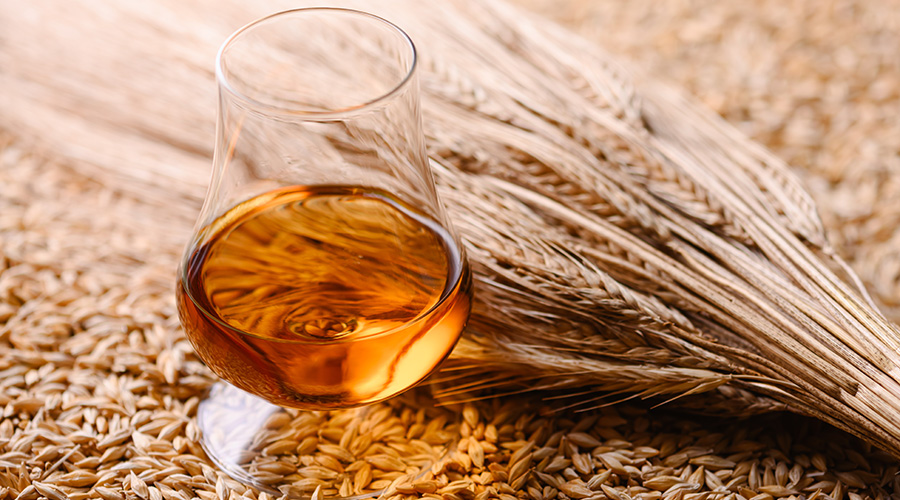
Irish whiskey production starts with deceptively simple ingredients—grains, water, and yeast—but the choices made at this foundational stage shape everything that follows. The type of barley used, the grain mix, and the water source all influence the spirit’s ultimate character.
Barley serves as the cornerstone grain for Irish whiskey:
- Single malt Irish whiskey uses 100% malted barley
- Single pot still whiskey requires a distinctive mix of malted and unmalted barley (often at least 30% of each)
- Irish grain whiskey incorporates corn (maize) or wheat alongside smaller portions of malted barley
The distinction between malted barley and unmalted barley matters significantly. Malted barley provides natural enzymes and fermentable sugars essential for creating alcohol. Unmalted barley, by contrast, contributes body, spice, and a slightly oily texture that’s become a hallmark of traditional pot still Irish whiskey—a style unique to Ireland.
Water plays multiple crucial roles throughout the production process:
- Soaking barley during the malting process
- Mixing with grist in mash tuns to extract sugars
- Cooling fermented wash and distillate
- Diluting the final spirit to bottling strength
Irish distillers prize soft, clean water sources—springs, rivers, and lakes near their distilleries—because consistent water quality ensures a consistent style.
Malting: Turning Barley into Malt
The journey of turning humble barley into a spirit-ready grain kicks off with malting. Think of it as a clever trick: the maltsters fool the barley into thinking it’s time to sprout, which wakes up vital enzymes. These enzymes are the magic workers that will later change the grain’s starches into the sugary food that yeast absolutely loves to feast on.
The old-school way—traditional floor malting—goes something like this:
- A Good Soak (Steeping): The barley gets submerged in water for about 40 to 60 hours, swelling up by a hefty 40–45% of its weight in moisture.
- Laying it Out (Spreading): The damp grain is spread out over the special malting floors.
- Regular TLC (Turning): Workers have to turn the grain constantly for four to five days. This is crucial for keeping the temperature in check, making sure air can circulate, and stopping any nasty mold from taking hold.
- Sprouting Time (Germination): The barley starts to sprout. Bingo! This activates the diastase enzymes, which are ready to do their sugar-conversion job.
The sprouting process is quickly stopped in a kiln, where a blast of hot air dries the grain down to just 4–5% moisture. This is a hugely important step—it locks in the enzyme power while keeping the starch intact for when it’s needed. The heat source matters a lot: historically, peat was the go-to fuel, giving a smoky kick. However, most Irish whiskey makers now use enclosed kilns with clean heat, which is why Irish whiskey usually avoids the signature smoky character of many Scotch whiskies.
That said, you are seeing more Irish distillers play around with a little bit of peat, offering a smoky option for those who want it—a clear sign that the Irish whiskey world is always moving forward while still respecting its deep roots.
These days, large-scale industrial malting has mostly taken over from floor malting for big production needs. Huge drum maltings feed multiple distilleries, delivering perfectly controlled batches that guarantee consistent temperature, moisture, and enzyme development across massive quantities of grain.
Milling and Mashing: Extracting the Sugars
Once malted, barley moves to milling and mashing—the stage where distillers grind the grain and use hot water to dissolve fermentable sugars into a sweet liquid called wort.
This is how the milling process works:
- Malted barley (and other grains when used) passes through a roller mill
- The mill crushes grain into grist.
- Husks remain relatively intact to aid drainage in the mash tun
- The grist ratio balances fine flour for extraction with coarse husks for filtration
Mashing transforms grist into sugary liquid:
| Stage | Water Temperature | Purpose |
| First water | ~60-65°C (140-149°F) | Activates alpha-amylase enzymes |
| Second water | ~70-75°C (158-167°F) | Continues starch conversion |
| Third water | Up to 95°C (203°F) | Extracts remaining sugars |
The hot water wakes up the malt enzymes, and they get busy breaking down the starch molecules into sugars that can ferment. This sugary liquid—we call it the wort—then drains from the mash tuns, usually clocking in around 10-15% sugar. Distillers often give the grains another rinse with hot water to squeeze out every last bit of sugar before sending the wort off to fermentation.
The leftover grain solids, which they call draff, definitely don’t get tossed. Most Irish distilleries actually give this high-protein stuff to cattle as feed. It’s a great little sustainability trick that’s been part of making whiskey for hundreds of years.
Fermentation: From Sweet Wort to Beer-Like “Wash”
Fermentation marks the moment when yeast works its magic, transforming the sugars in wort into alcohol and flavorful compounds. The result is a beer-like liquid called “wash”—essentially an unhopped beer that will soon be distilled into spirit.
The wort must cool to approximately 64-72°F before the yeast is added. This temperature range keeps proprietary yeast strains healthy and encourages the desired flavor profile.
Fermentation takes place in washbacks—large vessels traditionally crafted from:
- Oregon pine or Douglas fir (contributing subtle vanilla notes)
- Stainless steel (preferred by many modern distilleries for hygiene and precise temperature control)
The fermentation process typically lasts 48-96 hours in Irish whiskey production, yielding wash at around 8-12% ABV. Longer fermentation times—sometimes extending to 96 hours or beyond—create more fruity characteristics and complex aromas, a technique some distillers use to develop distinctive house characters.
During fermentation, yeast generates carbon dioxide as a byproduct. Modern washbacks feature vents for safety, and large distilleries often capture this CO2 for industrial sale. Built-in cooling coils or jackets help regulate temperature throughout the process, ensuring consistent quality batch after batch.
This stage also produces congeners—flavor compounds like fusel oils, aldehydes, and esters—that contribute to Irish whiskey’s characteristic fruity, smooth profile.
Distillation in Copper Pot Stills
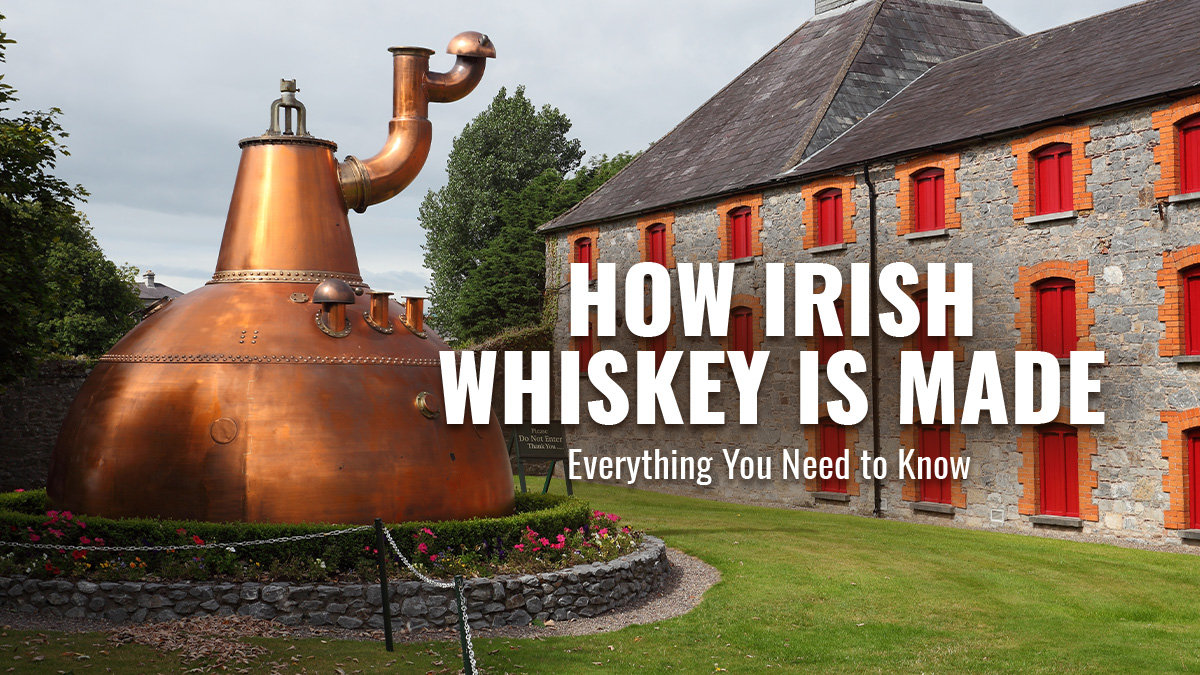
The distillation process lies at the heart of Irish whiskey tradition, particularly for single malt and pot still Irish whiskey. Many Irish distilleries embrace triple distillation—running the spirit through copper pot stills three times—to create a lighter, smoother spirit than double-distilled alternatives.
First distillation (wash still): The wash is charged into a large copper wash still and heated until alcohol and congeners vaporize at approximately 78°C. These vapors travel up the still neck, condense, and collect as “low wines” at roughly 20-25% ABV.
Copper stills prove essential because the metal reacts with unwanted sulfur compounds, helping purify and soften the spirit. Still shape—height, neck angle, lyne arm position, and overall size—subtly influences the final flavor. Taller stills with longer necks tend to produce lighter, more delicate spirits.
Second and third distillations:
| Distillation | Input | Output | Typical ABV |
| Second (intermediate still) | Low wines | Feints/good cut | 55-70% |
| Third (spirit still) | Good cut | New make spirit | 80-86% |
During each run, the distiller makes careful “cuts,” separating:
- Foreshots (heads): First vapors containing harsh, volatile compounds—discarded
- Hearts: The desirable middle portion collected for maturation
- Feints (tails): Later vapors with heavier compounds—recycled into subsequent distillations
Triple distilled spirit typically emerges at 80-86% ABV, noticeably higher than double-distilled whiskeys, contributing to that renowned smoothness.
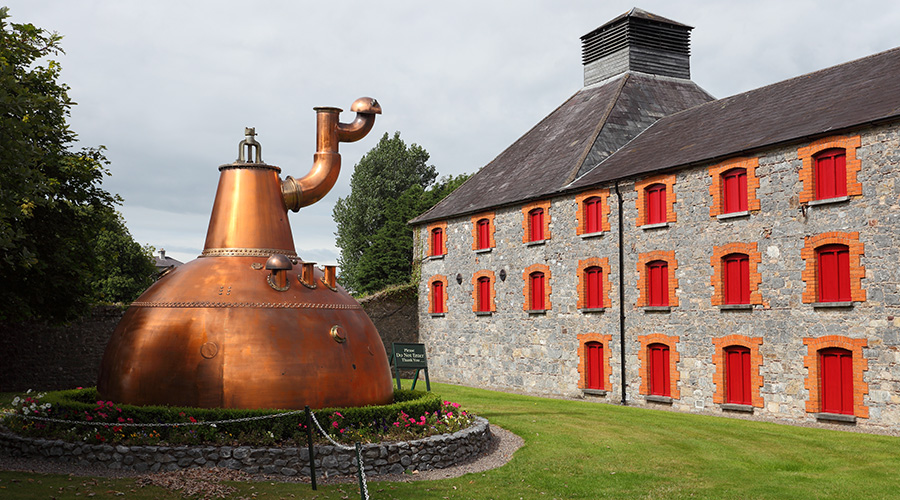
Historically, early Irish pot stills were enormous copper vessels fired by coal, requiring teams of workers and lengthy cooling times. Today’s still houses feature steam-heated, computer-monitored stills, though the fundamental principles—and the importance of copper—remain unchanged.
Column Still Distillation for Grain Whiskey
The 19th century brought a revolution to whiskey production: the column still. This innovation enabled continuous distillation and made modern Irish grain whiskey and blended whiskey possible.
Column still design basics:
- Two tall columns (analyzer and rectifier) work together
- Perforated plates or trays inside create multiple distillation stages
- Wash flows downward while alcohol vapor rises
- Efficient alcohol separation occurs by boiling point differences
- Continuous operation allows high-volume production
Irish grain whiskey is typically distilled to high strength—often reaching 94-94.5% ABV—producing a light, clean spirit with relatively neutral flavor. This lighter character makes grain whiskey ideal for blending, where it provides smoothness and balance.
The division of still types in Irish whiskey:
| Whiskey Style | Still Type | Character |
| Single malt | Pot still | Rich, complex, fruity |
| Single pot still | Pot still | Spicy, oily, distinctive |
| Grain | Column still | Light, smooth, subtle |
| Blended | Both | Balanced, approachable |
Master blender expertise becomes crucial here: combining pot still complexity with column still smoothness creates the balanced blended Irish whiskeys that dominate global sales. Some distilleries now bottle single grain Irish whiskey independently, often with interesting cask finishes.
Cask Selection and Ageing in Ireland
By law, Irish whiskey must be matured in wooden casks not exceeding 700 liters for at least three years on the island of Ireland. Many premium expressions far exceed this minimum—8, 12, 15, or even 21+ years—developing remarkable depth and complexity.
Common cask types and their flavor contributions:
| Cask Type | Origin | Flavor Notes |
| Ex-bourbon barrels | American white oak | Vanilla, caramel, coconut, gentle spice |
| Sherry casks | European oak | Dried fruits, nuts, rich dessert notes |
| Port casks | Portuguese oak | Berry sweetness, wine-like depth |
| Rum casks | Caribbean oak | Tropical fruit, molasses, warmth |
Irish whiskey primarily matures in used bourbon barrels, which account for about 70% of the casks. This preference is due to the constant availability of these once-used barrels—as bourbon must be aged in new oak—and the complementary flavors they impart. The toasted wood and charred interiors contribute vanillins, tannins, and color compounds that are crucial in transforming the raw spirit.
The aging process involves several simultaneous reactions:
- Extraction of flavor compounds from the oak casks
- Oxidation through the porous wood
- Gradual mellowing of alcohol “bite”
- Concentration of esters and aldehydes
- Color development from pale gold to deep amber
Ireland’s mild, maritime climate means the whiskey matures relatively steadily and gently compared to places with more extreme weather. That yearly evaporation of alcohol and water from the barrels, about 2–3%, is lower than hotter climates, but it certainly adds up over decades of aging.
Many distilleries also get creative with “cask finishes,” moving whiskey that’s already aged in, say, bourbon or sherry casks into a different kind of wood for the final stretch. These clearly marked bottles—a Madeira finish, a port cask, or a rum barrel—add a fun new layer of flavor on top of the original spirit.
Warehousing, Blending, and Bottling
Once maturation has progressed sufficiently, distillers sample casks regularly to assess development. Decisions follow: which casks shine as single-origin releases, and which contribute best to blended expressions achieving the house style.
Modern warehouse practices include:
- Racked or palletized cask storage systems
- Casks stored vertically (traditional) or horizontally
- Periodic sampling through bung holes
- Environmental controls in some facilities managing temperature and humidity
- Careful record-keeping tracking each cask’s journey
The master blender occupies a pivotal role in making Irish whiskey consistent yet distinctive. These experts combine pot still whiskey, malt whiskey, and grain whiskey from different casks and ages—sometimes dozens of components—to create recognizable flagship bottlings while also designing special limited releases.
Final preparation for bottling:
- Proofing: Matured spirit is reduced with high-quality water to bottling strength (minimum 40% ABV, often 40-46%)
- Filtration: Many whiskeys are chill-filtered to remove fatty acids and cask particles that could create haze at low temperatures
- Coloring: Caramel coloring (E150a) is permitted but not required
Premium bottlings often avoid chill-filtration and added coloring, releasing whiskey aged at natural cask strength. Labels indicating “non-chill filtered,” “natural colour,” or “cask strength” signal these more artisanal approaches—details enthusiasts frequently seek when shopping at specialty retailers.
Types of Irish Whiskey and How Production Shapes Flavor
Irish whiskey falls into four main categories, each defined by grain recipe, still type, and distillation approach. Understanding these distinctions helps you navigate shelves and menus with confidence.
Single Pot Still Irish Whiskey Made at a single distillery from a mash containing both malted and unmalted barley, distilled in copper pot stills typically two or three times. The combination of unmalted and malted barley creates distinct characteristics: rich, spicy, slightly oily textures unique to Ireland.
Single Malt Irish Whiskey Crafted from 100% malted barley at one distillery, pot-distilled (typically triple distilled), and usually unpeated. Irish malt whiskey highlights malt sweetness, orchard fruit, honey, and gentle cereal notes. Compared to many Scotch single malts, Irish versions tend toward lighter, fruitier profiles.
Irish Grain Whiskey Made primarily from corn or wheat with a smaller portion of malted barley, distilled in column stills for a light, clean spirit. Single grain releases showcase subtle sweetness and remarkable smoothness—excellent for exploration or cocktail mixing.
Blended Irish Whiskey A combination of two or more of the above styles, designed for balance, versatility, and approachability. Blended whiskey holds approximately 95% of the Irish whiskey market share.
Choosing and Enjoying Irish Whiskey
- Look for “single pot still” on labels for that distinctive oily, spicy character from unmalted barley
- Seek “triple distilled” mentions if you prefer maximum smoothness
- Check for cask information: “sherry cask finish” suggests dried fruit richness; “ex bourbon” indicates vanilla-caramel sweetness
- Note age statements—12 or 15 years signals extended maturation and deeper complexity
Serving and pairing suggestions:
| Style | Serving Suggestion | Pairing Ideas |
| Single pot still | Neat or with few drops of water | Dark chocolate, aged cheddar |
| Single malt | Neat, slight chill | Honey desserts, fruit tarts |
| Blended | Cocktails (Irish Coffee, Whiskey Sour, Highball) | Charcuterie, nuts |
| Grain | Highballs, mixed drinks | Light appetizers, citrus desserts |
For beginners, we recommend starting with smooth, affordable blends to develop your palate. More adventurous drinkers can explore age-stated single malts, robust pot still expressions, and limited-release cask finishes.
FAQ
Is all Irish whiskey triple distilled?
Triple distillation is traditional and extremely common among Irish distillers, but it’s not a legal requirement. Some distilleries deliberately choose double distillation to preserve a slightly richer, more robust character with additional congeners. When shopping, check labels or product descriptions—“triple distilled” will be prominently mentioned when applicable, but “Irish whiskey” alone doesn’t guarantee three distillations.
Does Irish whiskey have to be made from barley only?
While barley—both malted barley and unmalted barley—forms the foundation of single pot still and single malt Irish whiskey, regulations permit other cereals. Grain whiskey commonly uses corn (maize) or wheat as primary ingredients alongside smaller portions of malted barley for enzymatic conversion. As long as production methods and aging requirements are followed on the island of Ireland, these grain-forward whiskeys qualify as authentic Irish whiskey.
Why is Irish whiskey usually less smoky than Scotch?
The difference traces back to historical production methods. Most Irish distillers traditionally dried malted barley using closed kilns with coal or other clean-burning fuels rather than peat. This avoided transferring smoky phenolic compounds to the grain. Many Scottish distilleries—particularly on Islay—embrace heavy peat as a defining flavor component. That said, a few modern Irish producers like Connemara have introduced peated expressions, offering smoky options for those who enjoy that character in an Irish context.
What’s the difference between Irish whiskey and bourbon?
Several fundamental differences separate these spirits. Bourbon must be made in the United States from a mash containing at least 51% corn and aged in new charred oak barrels—never previously used—giving strong vanilla, caramel, and charred notes. Irish whiskey must be produced and aged in Ireland, typically uses barley as the primary grain, and matures in previously filled barrels (ex-bourbon, ex-sherry, or others). The result: Irish whiskey generally presents a lighter, smoother, more delicate profile compared to bourbon’s bolder, sweeter character.
How should I store an open bottle of Irish whiskey?
Store bottles upright in a cool, dark place with the cap tightly sealed to minimize oxidation. Unlike wine, whiskey doesn’t continue aging once bottled, but exposure to air gradually changes its flavor—typically dulling aromatic vibrancy over time. While Irish whiskey doesn’t “spoil” in any dangerous sense, most enthusiasts recommend enjoying opened bottles within 1-2 years for optimal character. If a bottle sits mostly empty, consider transferring remaining whiskey to a smaller container to reduce air contact.