

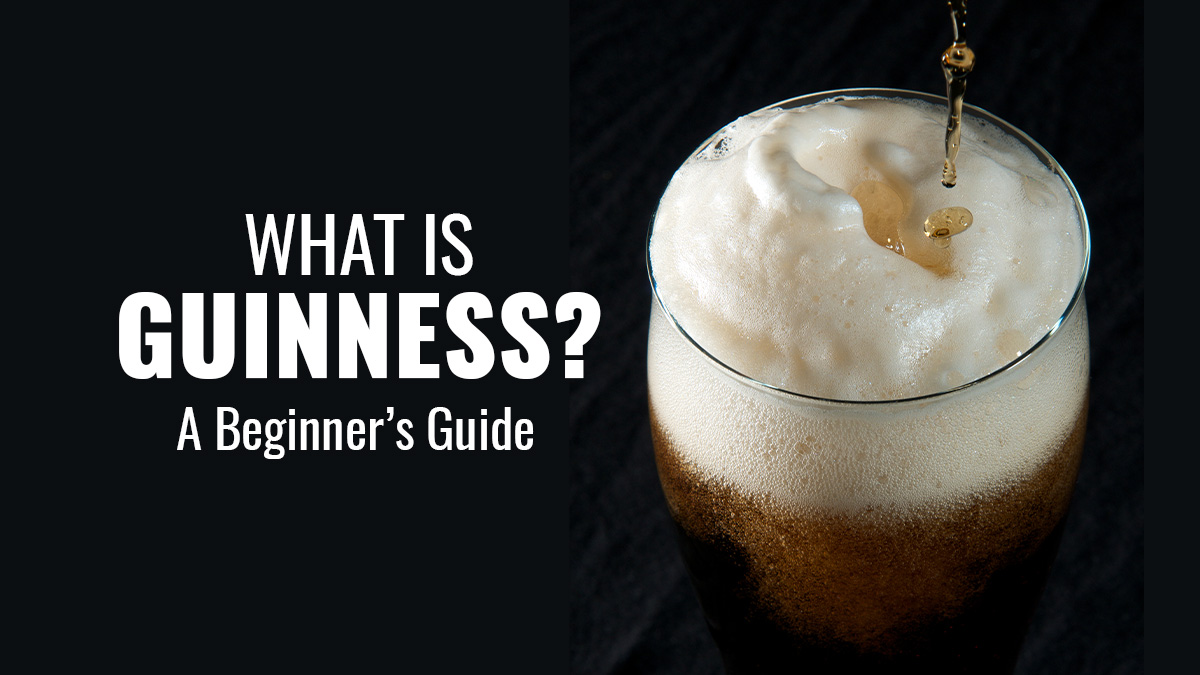
Few beers command as much reverence as that iconic dark pour with the cascading bubbles and thick, creamy head. For over 260 years, Guinness has stood as a global symbol of brewing craftsmanship, Irish heritage, and the simple pleasure of a well-made stout. But what exactly makes this legendary brew so distinctive, and why does it continue to captivate drinkers around the world?
What Is Guinness Beer?
Guinness is a family of Irish stouts and lagers originally brewed by Arthur Guinness at St. James’s Gate in Dublin, Ireland, starting in 1759. Today, the Guinness brand is owned and distributed globally by Diageo, a British multinational beverage company.
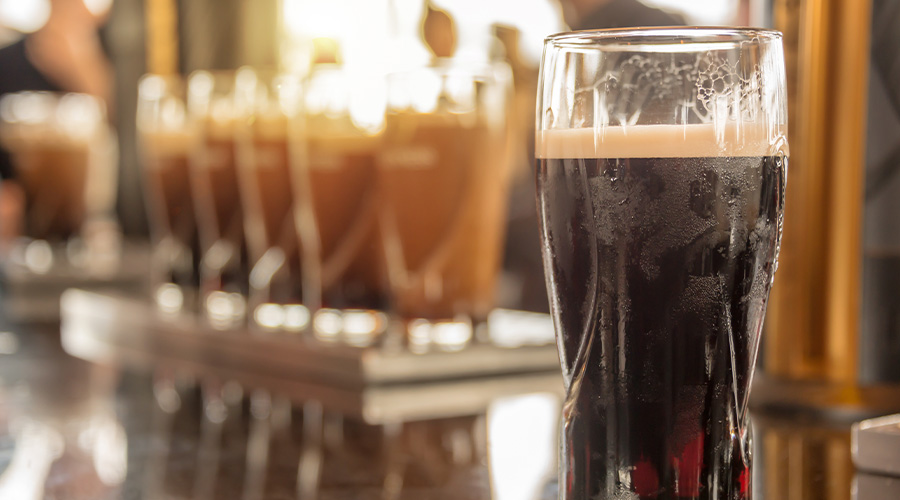
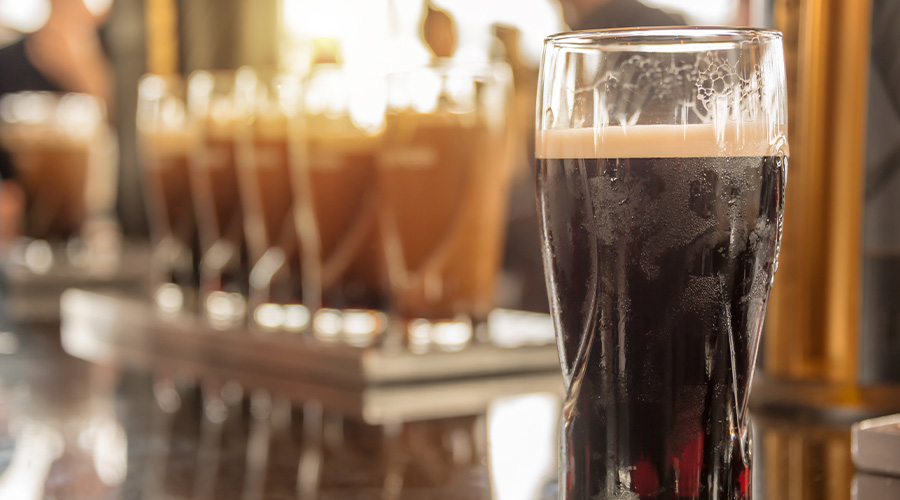
At its core, Guinness is a dark beer made from water, malted barley, roasted unmalted barley, hops, and a proprietary Guinness yeast strain that has been carefully maintained for well over a century. That roasted barley is the key ingredient responsible for the beer’s deep, nearly black appearance—though hold a pint up to the light, and you’ll notice it’s actually a rich ruby red.
When most people picture Guinness, they’re thinking of Guinness Draught: a smooth, nitrogenated stout with about 4.2% ABV, a dense creamy head, and a flavor profile that balances roasted coffee notes with gentle bitterness. However, the Guinness brand encompasses much more than a single beer.
Today’s portfolio includes:
- Guinness Draught – The flagship nitro stout
- Guinness Extra Stout – A carbonated, slightly stronger bottled version
- Guinness Foreign Extra Stout – A robust, high-ABV export stout
- Guinness Blonde – An American-style amber lager
- Guinness 0.0 – A non-alcoholic stout alternative
These Guinness beers are brewed in over 50 countries and sold in more than 100 markets worldwide. Spec’s carries multiple Guinness expressions in bottles, cans, and sometimes on draft for growler fills, depending on location and local regulations.
History of Guinness and St. James’s Gate
Guinness’s journey is truly incredible—it’s a tale of big dreams, brilliant new ideas, and a rock-solid belief in what they could become. Starting as just a little brewery in Dublin, it blossomed into one of the most famous beer names globally, with a rich history that stretches back hundreds of years and covers the whole world.
The Legendary Lease
Arthur Guinness, the man whose name is now synonymous with a brewing empire, made an incredibly bold move on the last day of 1759. He essentially bet on the future of his family for millennia by signing a mind-boggling 9,000-year lease for the four-acre James’s Gate Brewery in Dublin. And what’s more: the annual rent was a mere £45.
Born in 1725 in County Kildare, Ireland, Arthur got his start in brewing after inheriting £100 from his godfather, Archbishop Price, in 1755. He used that money to lease a smaller brewery in Leixlip before making the historic move to Dublin. It wasn’t long before his ambition took him across the water; by 1769, he was already shipping his ale to England.
From Ale to Porter to Stout
The first Guinness brewery didn’t actually start with stout. At first, they focused on ales before changing direction in the late 1770s to a darker, London-style porter. This porter—a beer invented by Ralph Harwood in London around 1722—got its deep, dark color and hearty flavor from roasted barley.
That shift was a game-changer. By the late 1770s, Guinness was the only one supplying porter to Dublin Castle, which cemented their status among the Irish upper crust. The darker beers simply clicked with Irish preferences, and the brewery never looked back.
Building a Brewing Dynasty
The Guinness family maintained control of the business through five successive father-to-son transitions until 1986:
| Generation | Key Figure | Major Achievement |
| 1st | Arthur Guinness | Founded brewery, signed 9,000-year lease |
| 2nd | Arthur Guinness II | Made St. James’s Gate Ireland’s largest brewery by 1830s |
| 3rd | Benjamin Lee Guinness | Established first trademark (1862), restored St. Patrick’s Cathedral |
| 4th | Edward Cecil Guinness | Floated company on London Stock Exchange (1886) |
| 5th+ | Rupert Guinness and successors | International expansion, modern innovations |
By 1838, St. James’s Gate had become Ireland’s largest brewery. By 1886, it was the world’s largest, producing an astounding 1.2 million barrels annually. The site had expanded to 60 acres and included its own railway and fire brigade.
The West Indies Connection
The West India Porter from the early 1800s is a real standout. It was brewed to be stronger and hoppier—tough enough to survive those grueling, long sea journeys to tropical spots like the Caribbean. That original export porter eventually transformed into what we now know and love as Guinness Foreign Extra Stout. Honestly, it’s still huge in places like Africa, Asia, and the Caribbean.
Guinness first started shipping to Africa in 1827, with Sierra Leone being the first destination. Then, in a huge step, they opened their first brewery outside of Ireland and the UK in Ikeja, Nigeria, back in 1962. This international push really cemented Guinness’s place as a truly worldwide brand.
Modern Era and the Guinness Storehouse
Today, the original St. James’s Gate brewery is still going strong, even though the big corporate bosses moved the main office to London way back in the early 1900s. Then, in 1997, Guinness joined the Diageo family, putting it alongside famous names like Johnnie Walker whiskey and Tanqueray gin.
The coolest thing, though, is the Guinness Storehouse. It opened in 2000 right at the historic Dublin site, turning the old fermentation buildings into an awesome, multi-story visitor center. It’s been a massive hit, drawing over 20 million people—it’s now one of Ireland’s top tourist spots and a must-visit for beer fans from all corners of the globe.
What Makes Guinness Beer Unique?
Guinness stands out from other beers because of its carefully selected ingredients, distinctive brewing techniques, and the revolutionary way it’s dispensed and served. Understanding these elements helps explain why this Irish stout has maintained its character across centuries and continents.
The Core Ingredients
Every batch of Guinness starts with four essential components:
- Water – Sourced from the Wicklow Mountains for the Dublin brewery
- Malted barley – Provides fermentable sugars and base flavor
- Roasted unmalted barley – The secret to the color and roasted character
- Hops – Contribute bitterness and balance
- Guinness yeast – A proprietary strain maintained for generations
That roasted unmalted barley is the key differentiator. Unlike many dark beers that use colored malts or additives, Guinness achieves its deep hue and distinctive taste through drum-roasted barley that’s taken to a very dark level. This ingredient imparts those signature notes of roasted coffee, bittersweet chocolate, and a subtle, dry bitterness.
Not Black, But Ruby
Here’s a surprising fact: Guinness isn’t actually black. Hold a pint glass up to a bright light, and you’ll see the beer glows a deep ruby red. That color comes entirely from the kilned and roasted barley—no syrups, no artificial colorings. It’s a natural result of the brewing process that’s been used since the 18th century.
The Flavor Profile
Guinness Draught delivers a complex but approachable taste:
- Roasted coffee notes – From the heavily roasted barley
- Bittersweet chocolate – Subtle cocoa undertones
- Gentle hop bitterness – Balancing rather than dominating
- Dry finish – Characteristic of the Irish stout style
The overall impression is smoother and less bitter than many expect. Despite its dark, intimidating appearance, Guinness is often described as surprisingly easy to drink.
The Nitrogen Revolution
Perhaps nothing distinguishes Guinness more than its use of nitrogen gas. Since 1959, Guinness Draught has used a blend of nitrogen and carbon dioxide rather than carbon dioxide alone. This innovation created the beer’s signature characteristics:
- Smaller bubbles – Nitrogen produces tinier bubbles than CO2
- Dense, creamy head – That thick, persistent foam cap
- Smooth mouthfeel – Less prickly carbonation
- The cascade effect – Nitrogen bubbles moving downward before settling
When you watch a freshly poured pint of draught Guinness, you’ll see what looks like the beer “settling”—streams of tiny nitrogen bubbles appearing to sink while the dark body separates from the pale, creamy head. It’s a visual ritual that’s become inseparable from the drinking experience.
Quality Control Pioneers
Guinness was also an early adopter of brewing science. In 1901, the brewery established a laboratory to refine brewing methods, ensuring consistency long before quality control became standard practice. This scientific approach helped standardize Guinness’s flavor worldwide, so a pint poured correctly in Lagos tastes remarkably similar to one served in Dublin or Houston.
Modern filtration processes have also made most Guinness products vegan-friendly by removing the isinglass (fish-derived finings) once used for clarification—a detail that matters to many contemporary drinkers.
Core Styles and Varieties of Guinness
While many people know only “a pint of the black stuff,” the Guinness brand actually produces multiple beers with different strengths, flavors, and ideal uses. Understanding these varieties helps you choose the right Guinness for any occasion.
ABV values and recipes can vary slightly by country, but the following descriptions focus on versions most commonly available in the U.S. and international markets. As a retailer, Spec’s often stocks seasonal or limited Guinness releases beyond these core offerings.
Guinness Draught
Guinness Draught is the flagship nitro stout that defines the brand for most drinkers. First launched in 1959 to celebrate the 200th anniversary of Arthur Guinness signing the St. James’s Gate lease, it represents a breakthrough in beer dispensing technology.
Key characteristics:
- ABV: Typically 4.2%
- Color: Very dark (ruby when backlit)
- Texture: Smooth, creamy mouthfeel from nitrogen
- Head: Thick, off-white, persistent
- Flavor: Roasted barley, subtle coffee, cocoa, gentle bitterness
Draught Guinness is served primarily on tap in pubs worldwide but is also widely available in nitro cans and bottles equipped with a nitrogen “widget”—a small plastic device that releases nitrogen gas when the can is opened, mimicking the draft experience at home.
Serving tips:
- Ideal temperature: Around 42°F (6°C)
- For Guinness Extra Cold versions: Around 38°F (3.5°C)
- Always pour into a glass rather than drinking directly from the can
Guinness Extra Stout
Guinness Extra Stout is a bottled, carbonated stout that traces its roots back to the original 19th-century Guinness porter recipes. It’s the style that would have been familiar to drinkers before nitrogen dispensing was invented.
Flavor profile:
- Crisper and more carbonated than Draught
- Pronounced roasted malt character
- Touch of fruitiness from fermentation
- More noticeable bitterness
- Dry, clean finish
ABV typically ranges from about 4.1% to 6% depending on the country. In the U.S., it usually sits around the mid-5% range, making it noticeably stronger than Draught.
The firmer carbonation makes extra stout especially suitable for:
- Enjoying straight from the bottle
- Beer cocktails
- Cooking applications (stews, sauces, baked goods)
Guinness Foreign Extra Stout
Guinness Foreign Extra Stout evolved from the early 1800s West Indies Porter, originally brewed with extra hops and higher alcohol to survive export journeys to tropical climates. It represents the bold, robust side of the Guinness family.
Profile:
- ABV: Typically around 7.5%
- Body: Full, robust, almost syrupy
- Flavor: Intense roasted malt, noticeable hop bitterness, dark fruit notes (raisin, plum)
Foreign Extra Stout remains especially popular in regions such as Africa, the Caribbean, and parts of Asia, where it accounts for a significant share of Guinness sales. In some African markets, it outsells the lighter Draught version by a wide margin.
Serving recommendations:
- Usually bottled rather than served on tap
- Best enjoyed slightly warmer than refrigerator temperature (mid-40s to low-50s°F) to open up complex flavors
Guinness Blonde
Guinness Blonde represents the brand’s foray into American-style amber lager territory. Originally brewed for the U.S. market in Latrobe, Pennsylvania, it was reformulated in 2018 for a brighter, more hop-forward profile.
The beer uses Guinness’s historic yeast strain but pairs it with American Mosaic and Citra hops, contributing:
- Citrus notes
- Floral aromatics
- Light tropical hints
- Clean malt base
Specifications:
- ABV: Around 5%
- Color: Golden-amber
- Finish: Crisp, refreshing
This style makes a lighter alternative to stout for warm weather or lager drinkers who want to explore the Guinness brand without diving into dark beer territory.
Pairing suggestions:
- Grilled chicken
- Spiced white-meat dishes
- Roasted vegetables like Brussels sprouts
- Kale salads and lighter fare
Guinness 0.0 and Other Modern Variants
Guinness 0.0 is the non-alcoholic stout launched in the 2020s, formulated to replicate the flavor and mouthfeel of Guinness Draught while removing nearly all alcohol.
How it’s made:
- Uses the same core ingredients and brewing process as regular Guinness
- Followed by a dealcoholization step
- Designed to preserve roasted, coffee-and-chocolate notes
- Maintains the creamy head characteristic
This variant caters to drinkers who want the Guinness experience without the alcohol—ideal for:
- Designated drivers
- Weeknight occasions
- Moderation-minded customers
- Those avoiding alcohol for health or personal reasons
How Guinness Is Brewed and Why Nitrogen Matters
Guinness brewing combines classic stout methods with modern science, particularly in its use of roasted barley and nitrogen dispense. Understanding the process reveals why this beer tastes and pours unlike any other.
The Brewing Process
The journey from grain to glass follows these basic steps:
- Mashing – Malted and unmalted barley are combined with hot water to extract fermentable sugars
- Boiling – The liquid (wort) is boiled with hops for bitterness and preservation
- Cooling – The wort is rapidly cooled to prepare for fermentation
- Fermenting – Guinness yeast is added, converting sugars to alcohol over several days
- Conditioning – The beer matures to develop flavor complexity
- Packaging – Final beer goes into kegs, bottles, or cans for distribution
The Role of Roasted Barley
The drum-roasted unmalted barley is arguably the most distinctive ingredient in Guinness. Roasted to a very dark level without first being malted, this grain provides:
- The deep, nearly black color
- Roasted, coffee-like bitterness
- Subtle chocolate undertones
- The dry finish characteristic of Irish stout
This technique sets Guinness apart from porters and other dark beers that may use chocolate malt, black malt, or other colored grains.
The Proprietary Yeast
Guinness yeast is a proprietary strain that has been maintained for generations. This living culture contributes subtle fruit and fermentation characteristics unique to Guinness beers. The brewer guards this yeast carefully—losing it would mean losing a crucial piece of the beer’s identity.
The Nitrogen Innovation
In the 1950s, Guinness faced a challenge: how to replicate the creamy texture of traditional cask-conditioned stout using modern draft systems. Mathematician and brewer Michael Ash led the effort to develop a two-gas keg system that could recreate that experience.
The solution used a blend of nitrogen and carbon dioxide. Nitrogen has lower solubility in liquid than CO2, which produces several effects:
| Carbon Dioxide | Nitrogen |
| Larger bubbles | Smaller bubbles |
| Sharp, prickly sensation | Smooth, creamy mouthfeel |
| Foamy, quickly dissipating head | Dense, long-lasting head |
| Standard carbonation feel | Cascading visual effect |
This breakthrough, introduced in 1959, created the Guinness Draught we know today.
How to Pour and Serve Guinness
Guinness is famous not just for its taste, but for the whole ceremonial way you pour it, which is key to getting that perfect creamy top and making it look right. Doing it properly just makes the whole presentation and drinking experience so much better.
Temperature Guidelines
| Guinness Style | Ideal Temperature |
| Draught | ~42°F (6°C) |
| Extra Cold | ~38°F (3.5°C) |
| Extra Stout | ~42°F (6°C) |
| Blonde | ~40-45°F (4-7°C) |
| Foreign Extra Stout | ~45-52°F (7-11°C) |
Avoid serving Guinness above 50°F, as warmer temperatures can throw off the flavor balance and reduce the quality of the head.
Glassware Matters
Guinness prefers a tulip-shaped pint glass, designed to:
- Encourage the nitrogen cascade
- Support and display the head
- Fit comfortably in hand
Glasses should be clean and dry—free of detergent residue, lipstick, or oils that can destroy foam. A dry glass helps the bubbles form properly and the head stay intact.
The Two-Part Pour Ritual
Both draft and canned Guinness benefit from a two-part pour technique, allowing the beer to settle before topping up. The entire process takes about 119.5 seconds—nearly two full minutes of anticipation that has become part of the brand’s mystique.
Classic Draft Guinness Two-Part Pour
Here’s how bartenders achieve the perfect pint from the tap:
Stage One:
- Start with a clean, dry Guinness tulip pint glass
- Hold the glass at roughly a 45-degree angle under the tap handle
- Pull the handle fully toward you
- Fill the glass to about three quarters full (target the harp logo if present)
- Set the glass on the bar to rest
The Settle:
- Allow 60-90 seconds for the beer to settle
- Watch the nitrogen cascade subside
- The beer transforms from cloudy to solid dark
- A clear cream head line will form
Stage Two:
- Place the glass upright under the tap
- Push the handle away (on specialized Guinness taps)
- Top off slowly until the foam just domes slightly above the rim
- The head should be about two inches thick
The result is a proper pint with that iconic two-tone appearance and a head sturdy enough to support a small coin in demonstrations.
Pouring Guinness from a Can at Home
Nitro cans are designed to replicate the draft experience. You have two options: the classic pour or the hard pour.
Classic Pour Method:
- Chill the can thoroughly
- Open while holding upright to let the widget activate
- Listen for the distinctive hiss
- Tilt a clean pint glass at 45 degrees
- Pour slowly down the side of the glass
- Straighten the glass as it fills
- Stop near the top and allow the beer to settle
- Gently top off to create a tight, creamy head
Hard Pour Method:
- Open the can and wait for the hiss
- Invert the can 180 degrees directly over an upright glass
- Pour firmly until empty
- Let the beer and head form naturally
The choice between methods is personal preference. The hard pour creates a more dramatic cascade and quicker head formation, while the classic pour offers more control.
Guinness and Food: Pairings and Recipe Ideas
Guinness’s roasted, slightly bitter profile makes it a versatile partner for savory comfort foods and rich desserts. The beer’s complexity stands up to bold flavors while its dry finish cleanses the palate between bites.
Traditional Irish Pairings
The classic combinations work for good reason:
- Irish stew – Lamb or beef with root vegetables
- Shepherd’s pie – The roast notes complement the rich meat filling
- Bangers and mash – Sausages and creamy potatoes
- Soda bread – The beer’s bitterness balances the bread’s slight sweetness
- Beef and Guinness pie – A match made obvious by the recipe itself
Savory Pairings Beyond the Classics
Guinness’s roasted character pairs beautifully with:
- Smoked meats and barbecue – Brisket, ribs, smoked sausages
- Dishes with caramelized onions – The sweetness plays off the bitter
- Mushroom-based dishes – Earthy flavors echo the roasted notes
- Sharp aged cheeses – Irish cheddar, aged gouda, stilton
- Oysters – A traditional Dublin pairing dating back centuries
Dessert Matches
Don’t overlook Guinness with sweets:
- Chocolate cake or brownies – The beer’s cocoa notes create harmony
- Chocolate tarts – Rich and complementary
- British-style fruit crumbles – The dry stout cuts through the sweetness
- Caramel desserts – Stout and caramel share roasted flavor compounds
- Coffee ice cream – For an after-dinner treat
Guinness Blonde Pairings
The lighter Guinness Blonde works with different fare:
- Roasted vegetables
- Green salads with citrus vinaigrette
- Grilled chicken
- Spiced white-meat dishes
- Light fish preparations
Cooking with Guinness
Guinness also makes an excellent ingredient in the kitchen:
| Application | How to Use |
| Beef stew | Add 1-2 cups to braising liquid |
| Chili | Replace some stock with stout |
| Soda bread | Substitute stout for buttermilk |
| Chocolate cake | Add to batter for depth |
| Cupcake frosting | Reduce and fold into buttercream |
| Chocolate mousse | Incorporate reduced stout |
| Beer float | Pour over vanilla ice cream |
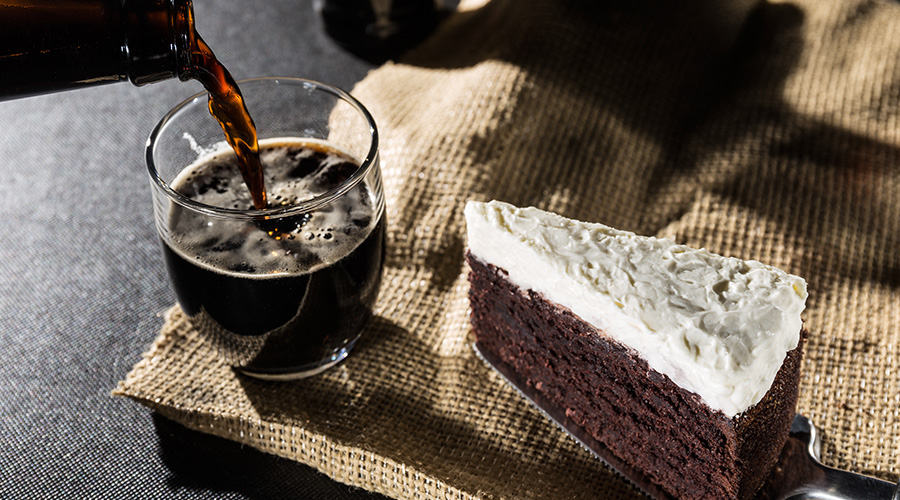
Guinness in Cocktails and Mixed Drinks
Guinness’s density and color make it popular in layered drinks and stout-based cocktails. The physics of nitrogenation allows for some visually striking presentations.
The Art of Layered Beer Drinks
Guinness’s relatively high density and nitrogenation allow it to “float” on top of lighter ales or lagers when poured gently over a spoon. The technique works because:
- Nitrogen creates a denser liquid structure
- Lighter, more carbonated beers have lower specific gravity
- Careful pouring prevents mixing
Classic layered combinations include stout poured over pale ale, creating a two-tone effect in the glass. Note that in Ireland and the UK, naming conventions for these drinks can be regionally sensitive—it’s worth being aware of local norms when ordering abroad.
Creative Cocktails
Guinness appears in various cocktail applications:
- Dessert-style drinks – Combined with coffee liqueur and Irish cream
- Stout sangrias – Mixed with wine and fruit
- Beer-tails – Shaken or stirred with spirits
Guinness and Health: Myths and Facts
That iconic phrase emerged in the 1920s as advertising copy, not as a scientifically approved health statement. It was eventually retired due to regulations governing health claims on alcoholic beverages—you won’t see it used literally today.
What’s Actually in Guinness?
Like other dark beers, Guinness contains small amounts of:
- B vitamins (from yeast and grain)
- Soluble fiber
- Antioxidant compounds (similar to those in red wine and dark chocolate)
Some research has suggested that moderate stout consumption may have certain cardiovascular benefits, such as reduced clotting potential. However, these findings should be viewed cautiously and within the context of overall health.
The Reality Check
Any potential benefits of moderate consumption can be outweighed by excessive drinking. Important considerations:
- People with health conditions should consult medical professionals
- Those on medications may have interactions with alcohol
- Pregnant individuals should avoid alcohol entirely
- The recommended limits apply regardless of beer type
A Lighter Beer Than You’d Think
It’s a genuine fact that a pint of Guinness Draught is surprisingly light, clocking in at around 125 calories—which is often less than what you’ll find in many IPAs, wheat beers, or stronger craft brews. People mistakenly think it’s “heavy” because of its dark color and that signature creamy texture, not because it’s loaded with extra calories or alcohol.
Build an Irish-Themed Experience
Consider pairing Guinness with complementary products available at Spec’s:
- Irish cheeses and charcuterie
- Artisan chocolates
- Quality cigars
- Gourmet snacks
- Irish whiskey for cocktails
Guinness has long been associated with health claims, especially due to old slogans like “Guinness is good for you.” Modern understanding is more nuanced.
FAQ
Is Guinness beer vegan?
Historically, Guinness used isinglass—a fish-derived clarifying agent—in its filtration process, making some versions unsuitable for vegans. In recent years, Guinness updated its process worldwide, removing isinglass from main products. Most modern Guinness beers, including Draught on tap and in cans, are now vegan-friendly. However, it’s worth checking the latest information on Guinness’s official site or product labels, as formulations can differ slightly by market and over time.
How many calories are in a pint of Guinness?
A standard 12-oz serving of Guinness Draught contains roughly 125 calories with about 9-10 grams of carbohydrates. This is often less than many higher-ABV craft beers, IPAs, or sweeter styles. Caloric content varies by variety—Foreign Extra Stout at around 7.5% ABV will have more calories per serving than Draught or Blonde. Check packaging or Guinness’s official nutritional information for precise numbers on specific products.
Why does Guinness taste different in Ireland compared to the U.S.?
The core recipe for Guinness Draught is tightly controlled, but flavor perception can change due to:
- Freshness of the beer
- Line cleanliness at individual bars
- Serving temperature
- Gas pressure settings
- Quality of the pour
Guinness served near the Dublin brewery benefits from extremely fresh beer and highly trained staff who specialize in the brand. At home, using properly chilled cans, clean glassware, and correct pouring techniques can help approximate that “perfect pint” flavor wherever you are.
Is Guinness really heavier than other beers?
While Guinness looks dense and creamy, its actual alcohol content (4.2% ABV for Draught) and calorie count are often lower than many IPAs, strong lagers, or craft beers. The perception of heaviness comes from the dark color and creamy texture, but nitrogen actually reduces the sharpness of carbonation compared to fully CO2-carbonated beers. Try comparing Guinness with other styles at Spec’s to see how it feels relative to higher-ABV or sweeter beers—you may be surprised.
How long does Guinness stay fresh, and how should I store it?
Store unopened Guinness cans and bottles upright in a cool, dark place—ideally refrigerated—to preserve flavor and carbonation. Most packaged Guinness carries a best-before date, typically several months from packaging. While it may be safe to drink after that date if stored properly, flavor and foam quality can decline.
Once opened, consume Guinness promptly. Don’t attempt to re-seal or save partially used containers, as the nitrogen and carbonation will dissipate quickly, leaving you with flat, stale beer.